
White House Budget Director Renews NIH Cuts Push as Congress Signals Resistance
Zero Signal Staff
Published April 12, 2026 at 12:13 AM ET · 1 day ago
Politico
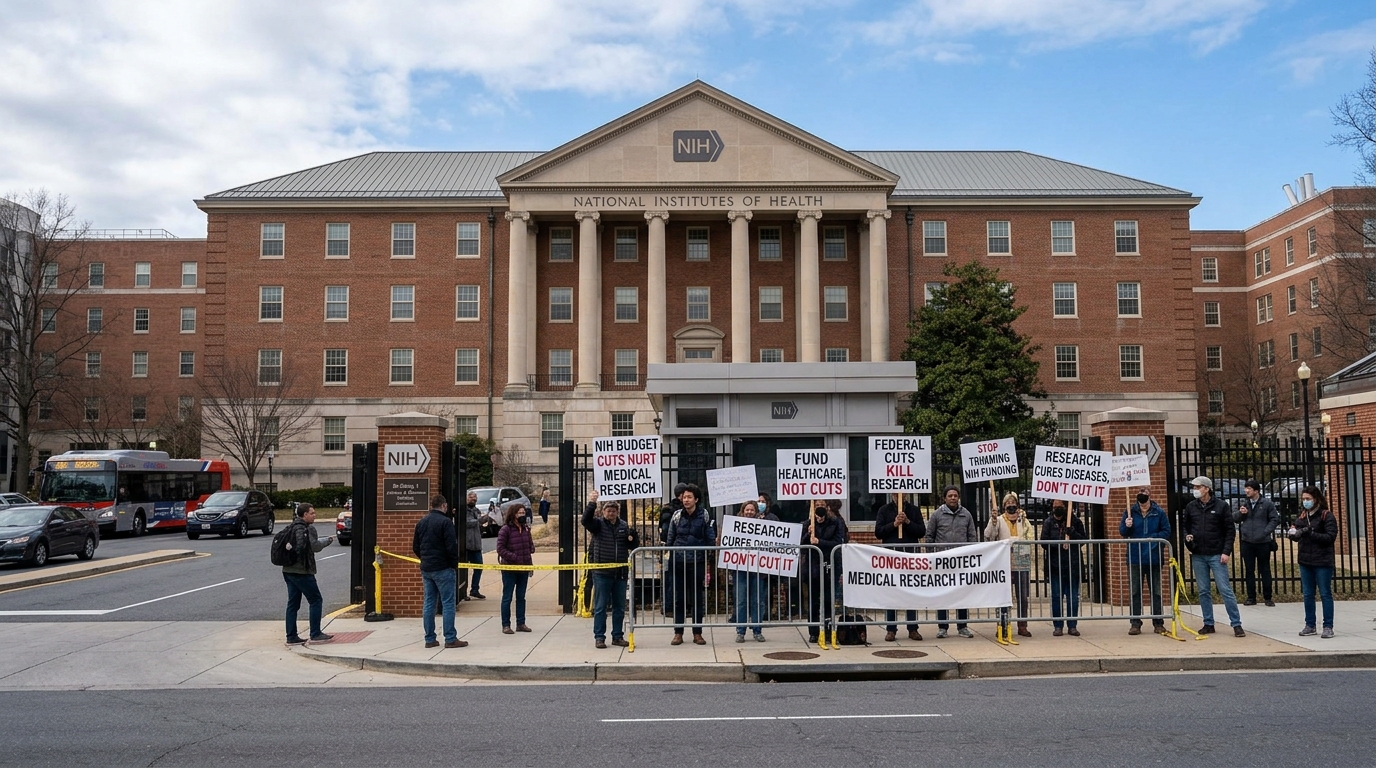
White House budget director Russ Vought proposed a 10 percent cut to the National Institutes of Health's 2027 budget on April 3, reducing funding from $46 billion to $41 billion.
White House budget director Russ Vought proposed a 10 percent cut to the National Institutes of Health's 2027 budget on April 3, reducing funding from $46 billion to $41 billion. Congress has already rejected similar cuts twice, and Republican lawmakers are publicly opposing the new proposal.
Vought's latest proposal would slash $5 billion from the NIH's current budget and eliminate several institutes, including the National Institute on Minority Health and Health Disparities and the Fogarty International Center, which funds global health research. This marks his second major attempt to reduce the agency's funding; his first proposal last year called for a 40 percent cut, which Congress rejected in the February spending bill.
The proposal faces immediate opposition from Republican lawmakers. Senate Appropriations Chair Susan Collins of Maine called the cuts "unwarranted" after reviewing the proposal. Sen. Katie Britt of Alabama, also on the appropriations panel, has previously spoken out against NIH reductions. Three days before Vought released the budget plan, Sen. Dave McCormick of Pennsylvania toured a University of Pennsylvania cancer research lab with NIH Director Jay Bhattacharya and promised to oppose any cuts to the agency.
Congress demonstrated its commitment to the NIH last year by approving a $415 million increase despite Vought's initial proposal. The agency disperses most of its funding through grants to universities and research facilities. Bhattacharya spent every dollar Congress allocated to the NIH by the end of the 2025 fiscal year, contrasting with other agencies that implemented Vought's cost-cutting directives by withholding funds.
Sudip Parikh, president of the American Association for the Advancement of Science, said the budget proposal conflicts with the agency's scientific direction. "There's a disconnect between the budget process and the scientific leadership," Parikh stated. "It's really perplexing to me — how that aligns with the idea that we're going to be competitive, the idea that we are going to have a golden era of science in this country."
Context
Lawmakers maintain strong financial ties to the NIH because most grant money flows back to research institutions in their districts and states. This creates what officials describe as a symbiotic relationship: researchers gain funding for medical advances, and lawmakers receive credit for supporting scientific breakthroughs that resonate with constituents. The agency is the world's largest funder of health research and supports clinical trials across hundreds of universities and medical centers nationwide.
Vought served as budget director during Trump's first term and is considered one of the most powerful budget directors in recent history. In his current role, he has successfully reduced spending at other agencies, including the State Department, which implemented his cost-cutting directives by not spending allocated funds. The NIH has proven a harder target because of the political benefits lawmakers derive from the agency's grants.
What's Next
NIH Director Bhattacharya is expected to defend the agency's budget to Congress, though his position remains unclear. Just three weeks before Vought released the proposal, Bhattacharya told the House Appropriations panel that he would ensure every dollar Congress allocated would be spent on "excellent science" by the end of the fiscal year. His full-spending approach last year contrasted sharply with the agency's slowdown in grant-making during the previous budget cycle, signaling potential resistance to further cuts from the agency's leadership.
The 2027 budget proposal will move through the appropriations process in Congress, where Republicans have already signaled they will oppose the reductions. The outcome will likely determine whether Vought's power to reshape federal spending extends to agencies with strong congressional support.
Never Miss a Signal
Get the latest breaking news and daily briefings from Zero Signal News directly to your inbox.