
US Gas Prices Surge Past $4 Despite Record Domestic Oil Production
Zero Signal Staff
Published April 12, 2026 at 12:08 PM ET · 1 day ago
Ars Technica
Gasoline prices have climbed above $4 per gallon for the first time in four years following the Iran conflict and the month-long blockade of the Strait of Hormuz, undercutting President Trump's assertion that record US oil and gas production...
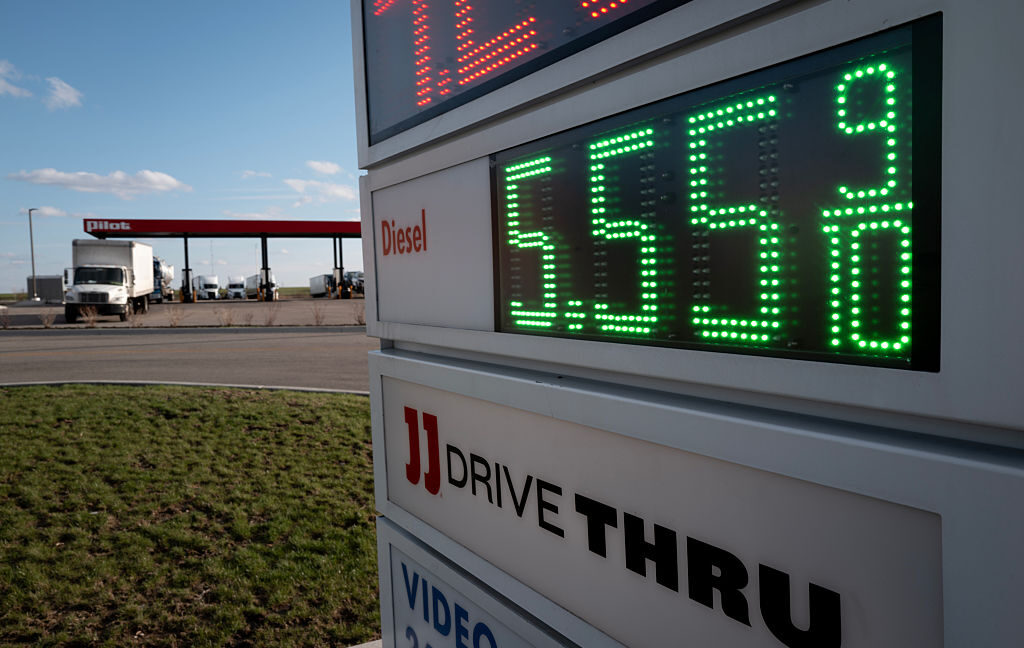
Gasoline prices have climbed above $4 per gallon for the first time in four years following the Iran conflict and the month-long blockade of the Strait of Hormuz, undercutting President Trump's assertion that record US oil and gas production insulates the nation from global energy disruptions. American households paid $8.4 billion more for gasoline in the past month compared to pre-conflict prices, according to a report by Democrats on the Congressional Joint Economic Committee. The price spike demonstrates that domestic production alone cannot shield US consumers from international energy market volatility.
The United States currently produces approximately 13 million barrels of oil per day—a record high—yet still imports 6.1 million barrels daily to meet domestic demand of 20 million barrels per day. About 8 percent of US crude imports originate from the Persian Gulf, primarily Saudi Arabia and Iraq, both affected by Iran's control of the Strait of Hormuz. Though US crude exports exceed imports (10.8 million barrels per day versus 6.1 million barrels per day), the nation relies on specific foreign crude grades to meet the technical specifications of its refineries.
The blockade of the Strait of Hormuz, which handles 20 percent of the world's oil and liquefied natural gas supplies, persisted even after a two-week ceasefire agreement in early April. Iran has signaled its intention to maintain control over the passageway and levy multimillion-dollar tolls on tankers for post-war reconstruction, according to industry reports. The US Energy Information Administration projected in a Tuesday outlook that oil prices will remain elevated through the end of 2026 even if the conflict is fully resolved by month's end.
The energy shock has extended beyond US borders. Parts of Asia have implemented gas rationing, European flights have been cancelled, and filling stations across Europe have faced shortages. Kate Gordon, CEO of California Forward and former senior advisor at the Department of Energy under President Biden, stated that true energy independence would require dramatically reducing oil demand—a transformation that cannot occur overnight. "The only way to do what the president said in his speech, which is to be completely independent and have this not matter to us at all, is to just dramatically reduce demand for oil," Gordon said.
Context
The United States has held the position of world's largest oil and gas producer since 2018, when hydraulic fracturing and horizontal drilling technologies expanded domestic reserves. However, the nation simultaneously remains the world's largest oil consumer. This dual role creates structural vulnerability to global supply disruptions regardless of domestic production capacity. When the 2022 Russia-Ukraine conflict disrupted energy markets, US gasoline prices similarly spiked despite high domestic production, reaching $5.02 per gallon in June 2022.
The current crisis exposes tensions within the Trump administration's energy strategy. While the administration has prioritized fossil fuel expansion and rolled back climate policies, these moves have not reduced US exposure to geopolitical energy shocks. Analysts Jason Bordoff of Columbia University and Meghan L. O'Sullivan of Harvard University noted in Foreign Affairs this week that "the clean energy transition has not eliminated geopolitical risk. It has layered new vulnerabilities atop old ones," highlighting that even renewable energy transitions introduce new dependencies—such as China's control of rare-earth elements critical to clean technology manufacturing.
What's Next
The immediate outlook hinges on Iran's enforcement of Strait of Hormuz tolls and the durability of the ceasefire agreement. Damage to Qatar's Ras Laffan Industrial City—the world's largest LNG export terminal, struck by missiles during the conflict—could constrain global liquefied natural gas supplies for years, sustaining elevated energy prices through 2026 and beyond. The administration faces mounting pressure from the oil industry to negotiate Iran's toll demands while managing domestic political fallout from pump prices that have erased gains from earlier energy policy initiatives. Any escalation in the Iran conflict or failure to reopen the Strait of Hormuz fully would likely push US gasoline prices higher still.
Never Miss a Signal
Get the latest breaking news and daily briefings from Zero Signal News directly to your inbox.