
Trade Chief Defends Tariffs Amid Inflation Spike During Rust Belt Tour
Zero Signal Staff
Published April 12, 2026 at 12:12 AM ET · 1 day ago
Politico
U.S.
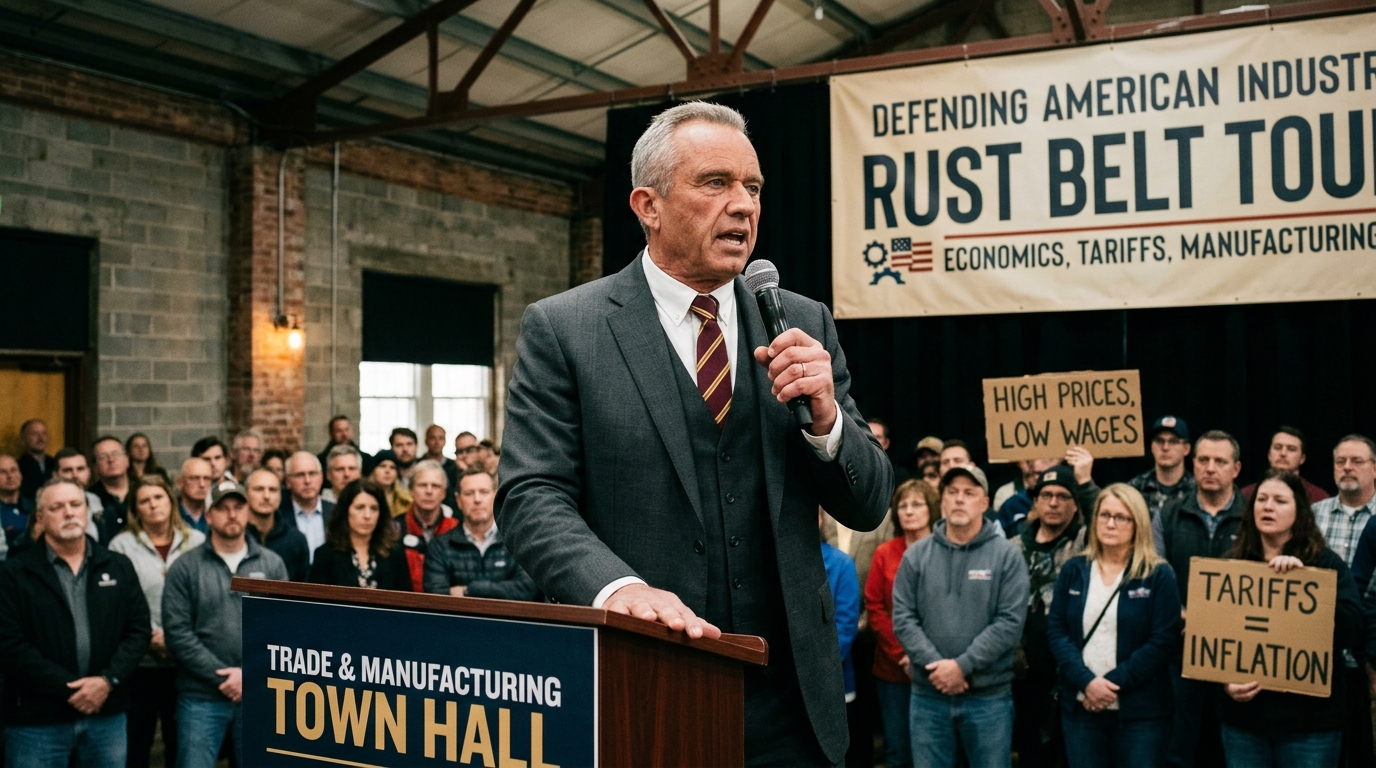
U.S. Trade Representative Jamieson Greer toured manufacturing facilities across Ohio and Michigan on April 9-11, 2026, defending the Trump administration's tariff policies despite inflation reaching 3.3 percent in March—the highest level in two years. Greer characterized the economic headwinds as temporary disruptions while highlighting new manufacturing investments, including a $60 million Whirlpool factory expansion in Ohio.
Greer visited five manufacturing sites in the industrial heartland, including a Whirlpool washing machine plant in Clyde, Ohio and a Stellantis facility in Warren, Michigan producing Jeep Wranglers. At each stop, he argued that trade policies are driving job creation and wage growth in manufacturing sectors, stating "the trade program, it's not really about prices, it's about jobs and wages."
The timing of Greer's tour coincided with Friday's Labor Department report showing inflation jumped to 3.3 percent in March, with energy costs accounting for nearly three-quarters of the monthly increase. The spike follows a two-week ceasefire in the Middle East conflict that has disrupted global supply chains and driven up energy prices. According to S&P Global Market Research, only three tankers have passed through the Strait of Hormuz since the ceasefire began Tuesday, compared to more than 50 daily before the war.
Greer dismissed concerns about the inflation data, telling reporters "You analyze the number, it sounds scary, but the reality is, we have a temporary disruption." He contrasted current conditions with the Biden administration's inflation peak of 9 percent, claiming "the fundamentals of the economy are where we want them to be."
Consumer sentiment has declined sharply. The same Friday report showed consumer confidence sank to a record low, a metric that typically precedes shifts in voter behavior. Democrats are already using the economic data to attack Republican policies, pointing to both tariffs and the Iran conflict as drivers of rising costs for American households.
Context
The Rust Belt tour echoes a political strategy that proved effective in 2016 and 2020, when Trump won Michigan and Ohio by focusing on manufacturing job losses and pledging to restore industrial capacity. Both states are now central to 2026 Senate and gubernatorial races that could determine control of the chamber.
The inflation spike represents a reversal of the Biden administration's messaging from 2021-2023, when officials repeatedly characterized high inflation as "transitory." Democrats are now using identical economic conditions to challenge Republicans, creating a symmetrical political vulnerability. The February Supreme Court ruling on Trump's tariffs had begun to reduce business uncertainty after a year of trade policy turbulence, but the Middle East conflict has reintroduced supply chain instability and energy cost pressures that complicate the administration's economic narrative.
What's Next
The 2026 midterm races in Michigan and Ohio will likely hinge on whether energy prices stabilize and manufacturing investments materialize as promised. Greer's tour represents the administration's attempt to establish a jobs-focused counternarrative before Democratic campaigns fully mobilize around inflation data. The Whirlpool investment announcement—the tour's centerpiece—will be tested against actual hiring timelines and wage levels; any delays or smaller-than-expected job creation would undermine the "plan is working" messaging. The Strait of Hormuz traffic data will be a key indicator: if tanker crossings remain near current levels, energy costs are unlikely to fall, making Greer's "temporary disruption" claim harder to defend.
Never Miss a Signal
Get the latest breaking news and daily briefings from Zero Signal News directly to your inbox.