
Ambulances Now Stock Blood For Trauma Transfusions, Reducing Deaths By Up To 37%
Zero Signal Staff
Published April 11, 2026 at 12:12 PM ET · 2 days ago
NPR Health
Ambulance services across the United States are increasingly carrying blood supplies to administer transfusions at trauma scenes, a practice that has expanded from roughly 20 agencies a few years ago to approximately 300 of the nation's 15,000 EMS...
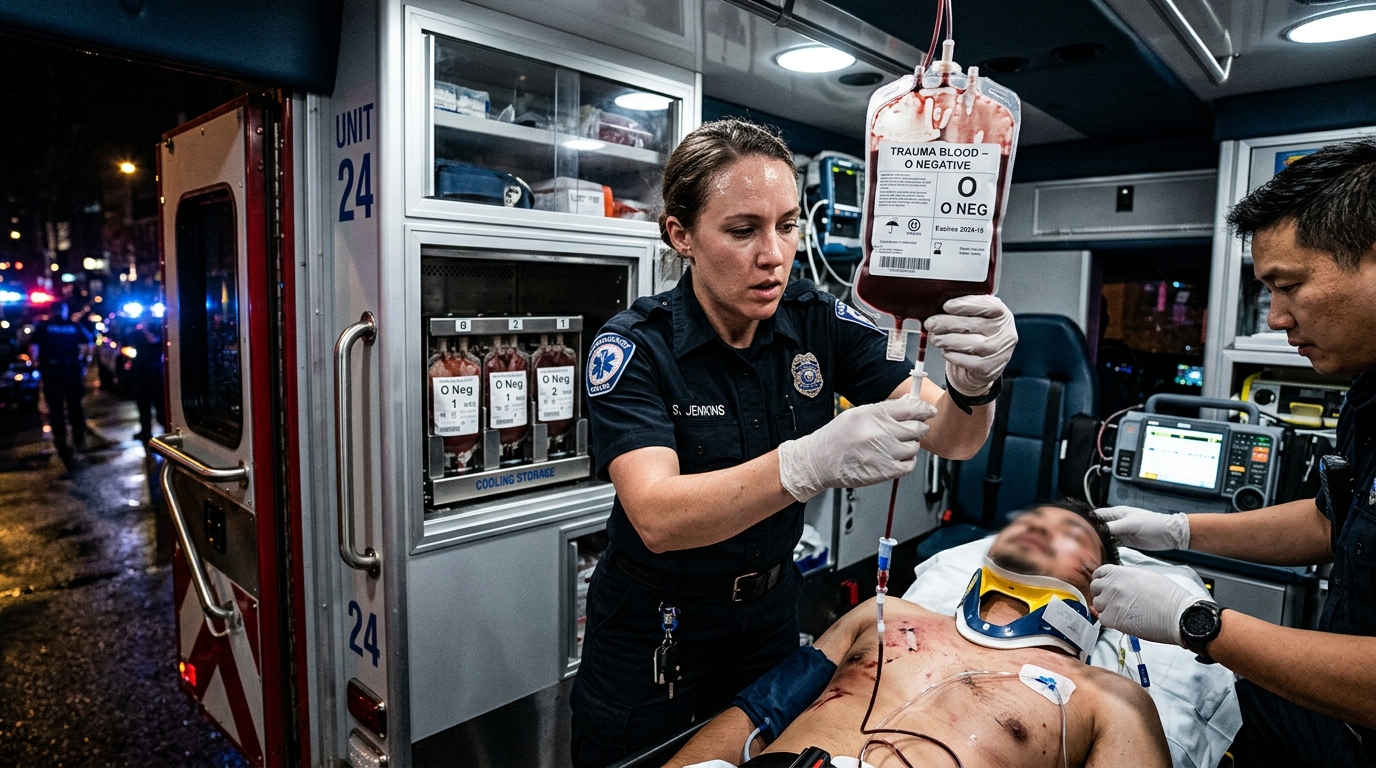
Ambulance services across the United States are increasingly carrying blood supplies to administer transfusions at trauma scenes, a practice that has expanded from roughly 20 agencies a few years ago to approximately 300 of the nation's 15,000 EMS agencies today. The federal government awarded $50 million on April 10, 2026, to accelerate the rollout, citing research showing prehospital blood transfusions can reduce mortality by 37% in severe hemorrhage cases.
Paramedic Tia Olson with AMR Hartford in Connecticut demonstrates the blood warmer technology that allows first responders to administer type O blood—compatible with all blood types—in the field. Within one to two minutes of transfusion, patients experiencing severe blood loss show stabilized vital signs and restored skin color, Olson said. The practice originated in military medicine, where medics found it dramatically improved survival rates for combat casualties. Dr. John Pettini, EMS medical director at St. Francis Hospital in Hartford, said the intervention works in both rural and urban settings because every minute without transfusion in severe hemorrhagic shock increases mortality.
Miles Garrison, another paramedic supervisor with AMR Hartford, said he has observed measurable improvements in patient outcomes since blood became available. "If we can get the blood in as fast as we can, administer it to them, it gives them more time to stay alive, to get to the hospital," Garrison said. The blood must be kept at precise temperatures and expires, requiring continuous supply management at ambulance stations.
Jonathan Morrison, administrator of the National Highway Traffic Safety Administration, stated his agency is prioritizing rapid expansion of prehospital blood programs nationwide. "If I had a magic wand, I would be looking to make this available to any EMT agency that's interested," Morrison said. The $50 million in federal funding is being distributed to ambulance services from rural Oregon to Tampa, Florida.
Context
Blood loss is the leading preventable cause of death for trauma patients, including those injured in car crashes and shootings. Historically, patients could not receive transfusions until arriving at hospital emergency departments, a delay that proved fatal in severe hemorrhage cases. The military's adoption of prehospital transfusion in combat zones established the medical foundation for civilian adaptation. The American College of Emergency Physicians documented the 37% mortality reduction figure that federal officials cited when justifying the funding allocation.
What's Next
The expansion faces logistical constraints: only 2% of the nation's EMS agencies currently operate prehospital blood programs, meaning the newly funded agencies will roughly double the existing capacity. NHTSA leadership has stated the goal is rapid scaling, though adoption depends on individual agencies securing cold-chain infrastructure and training paramedics in transfusion protocols. The next phase will test whether rural ambulance services can maintain the supply chain and temperature controls necessary to sustain the program in areas farther from blood banks.
Never Miss a Signal
Get the latest breaking news and daily briefings from Zero Signal News directly to your inbox.